I Am Isa
Projects _
Narrative Serious Game – Master’s Research
Serious Game
Narrative Design
Systems Design
Visual Novel
Social Impact
In Development
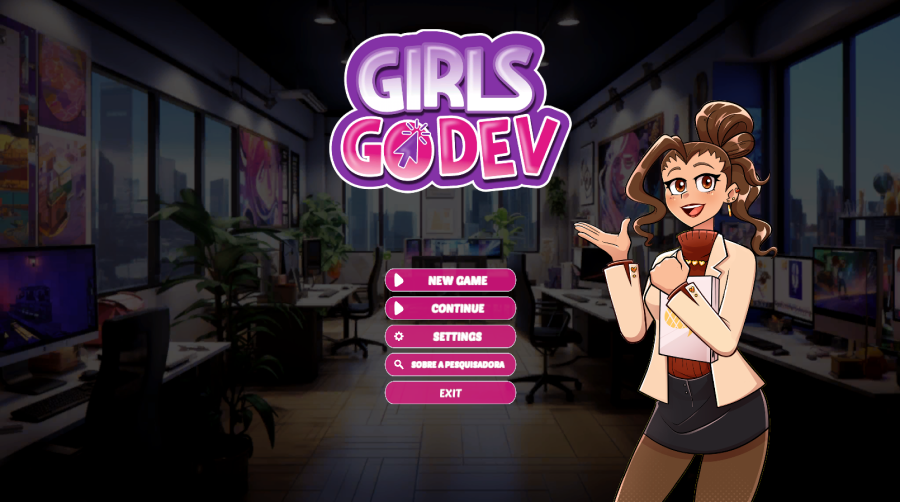
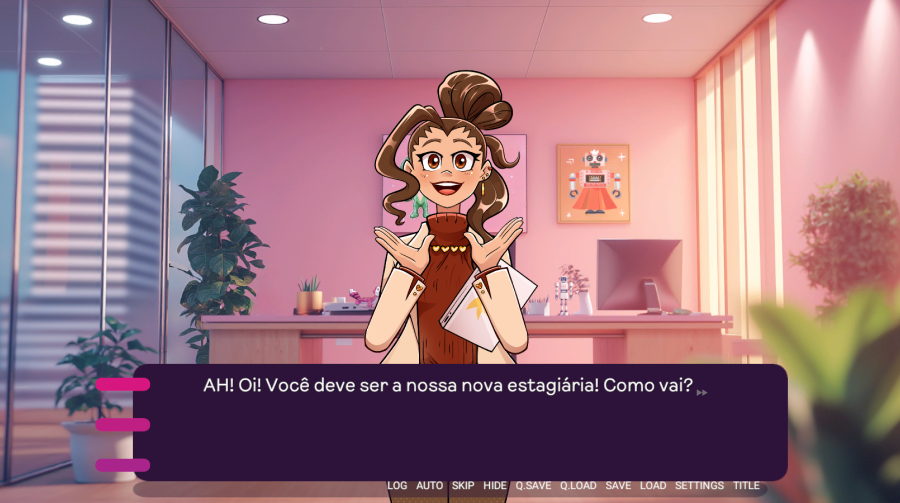
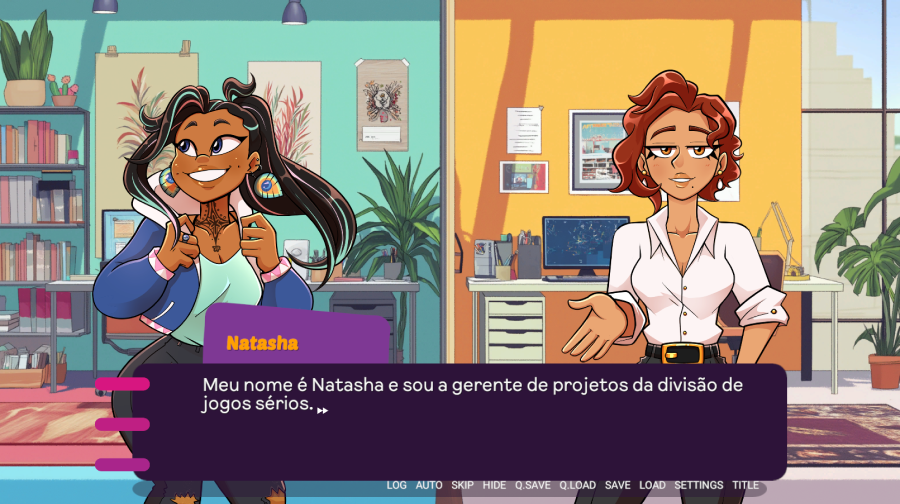
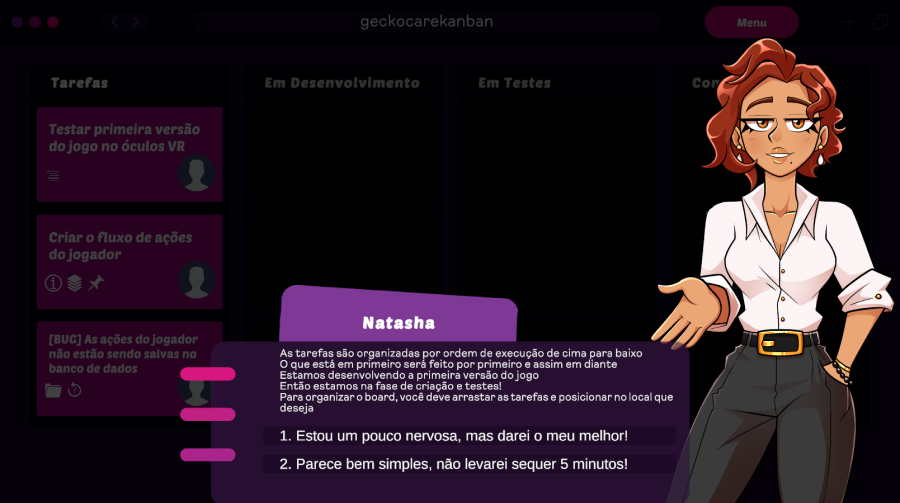
Girls Go Dev is a narrative-driven Serious Game designed to inspire and encourage girls to pursue careers in technology. Developed as part of my Master’s research, the project explores how interactive storytelling and game systems can foster curiosity, confidence, and long-term interest in tech-related fields. The experience translates real technology professions into engaging minigames, allowing players to experiment with different roles while progressing through an original story led by charismatic and relatable characters. A key design goal was to create a sense of agency and empowerment, including the cathartic feeling of creating a game inside a game: reinforcing the idea that technology is accessible, creative, and welcoming.
Game Design & Systems
Defined the core concept, player experience goals, and progression structure. Designed and balanced minigames that represent different technology professions while maintaining narrative coherence.
Production & Creative Direction
Managed project scope and timelines, coordinated tasks, and defined the overall art direction and game style in alignment with the project’s educational and emotional goals.
Narrative & Character Design
Wrote the main narrative and designed characters focused on relatability and emotional connection, reinforcing player motivation and identification throughout the experience.
Research & Academic Foundation
Conducted research to ensure thematic authenticity and relevance, grounding design decisions in academic studies related to games, education, and gender inclusion in technology.
Documentation (GDD)
Authored and maintained a complete Game Design Document, structuring systems, narrative flow, mechanics, and development processes.
Playtesting & Iteration
Organized playtesting sessions, gathered qualitative feedback, and iterated on mechanics, pacing, and narrative clarity to improve player engagement and learning outcomes.
Dissertation (Master’s Research):
🔗 https://bdtd.ibict.br/vufind/Record/PUC_PR-29_578d862f71e228fa56c7cebca5b0f45b
Engine & Frameworks
Unity, NaniNovel (Unity)
Design & Prototyping
Figma
Documentation & Planning
Game Design Document (GDD), narrative flowcharts, system breakdowns
Player-first systems, narrative engagement, social impact, long-term motivation.
Systems-Driven Card Game with Competitive & Cooperative Modes
Physical Card Game
Systems Design
Hybrid Gameplay
Social Dynamics
Emergent Gameplay
In Testing
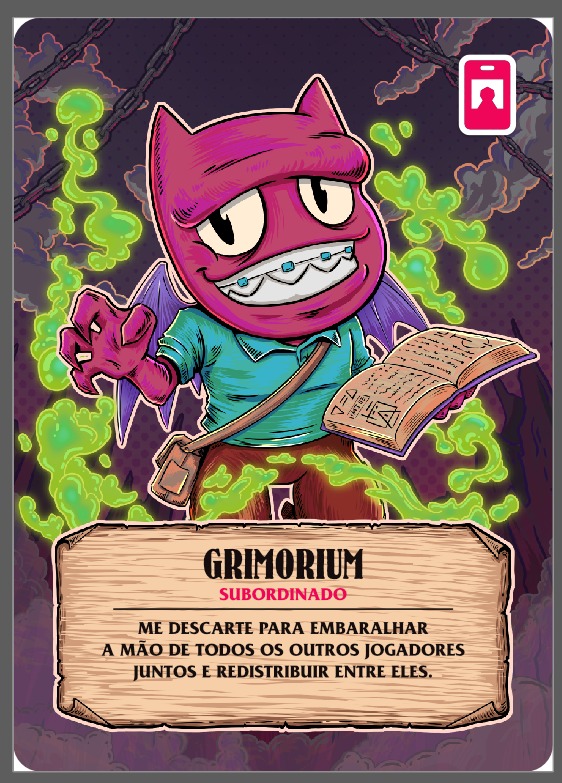
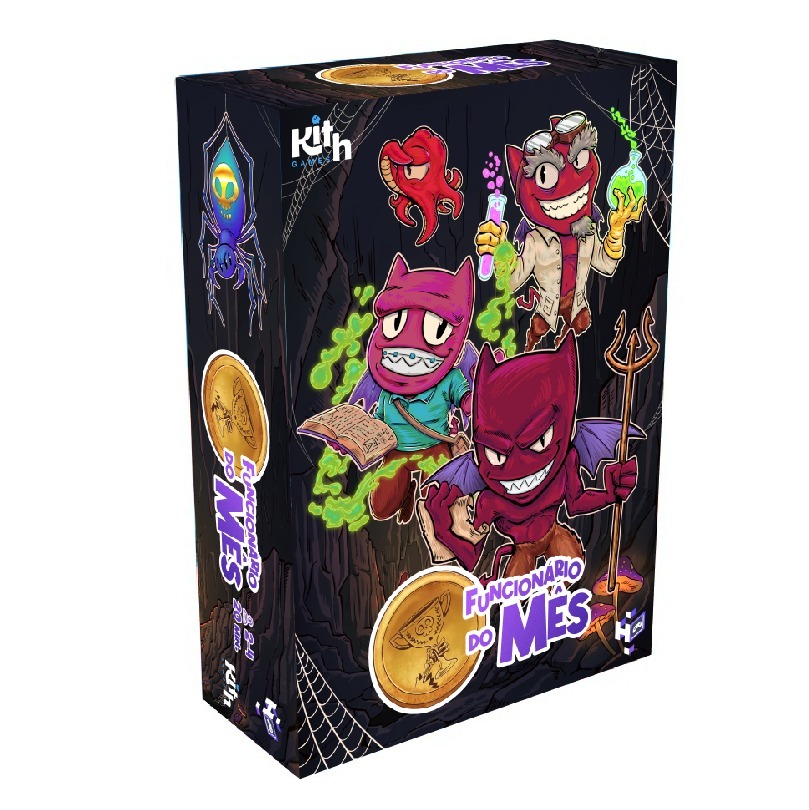
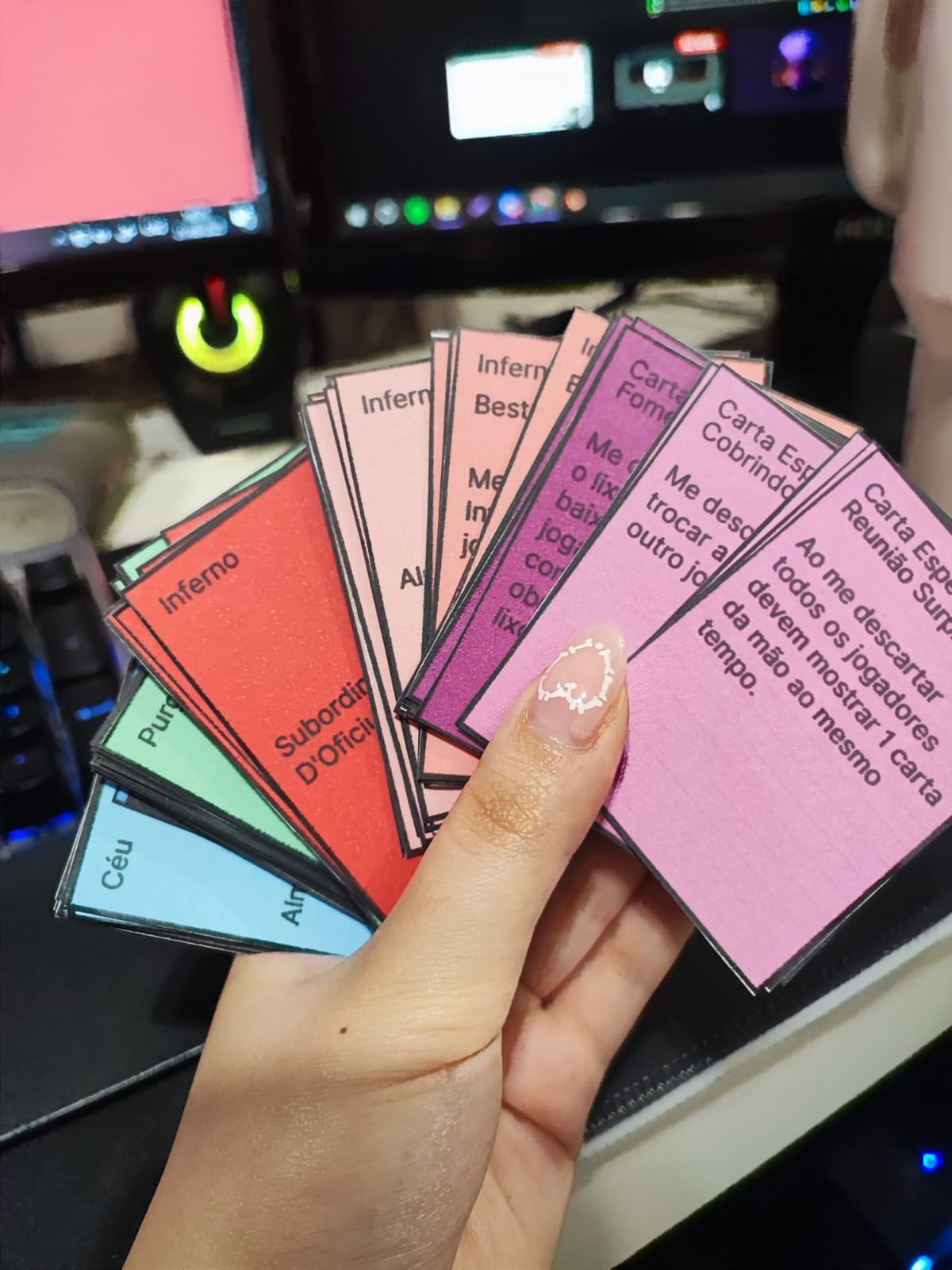
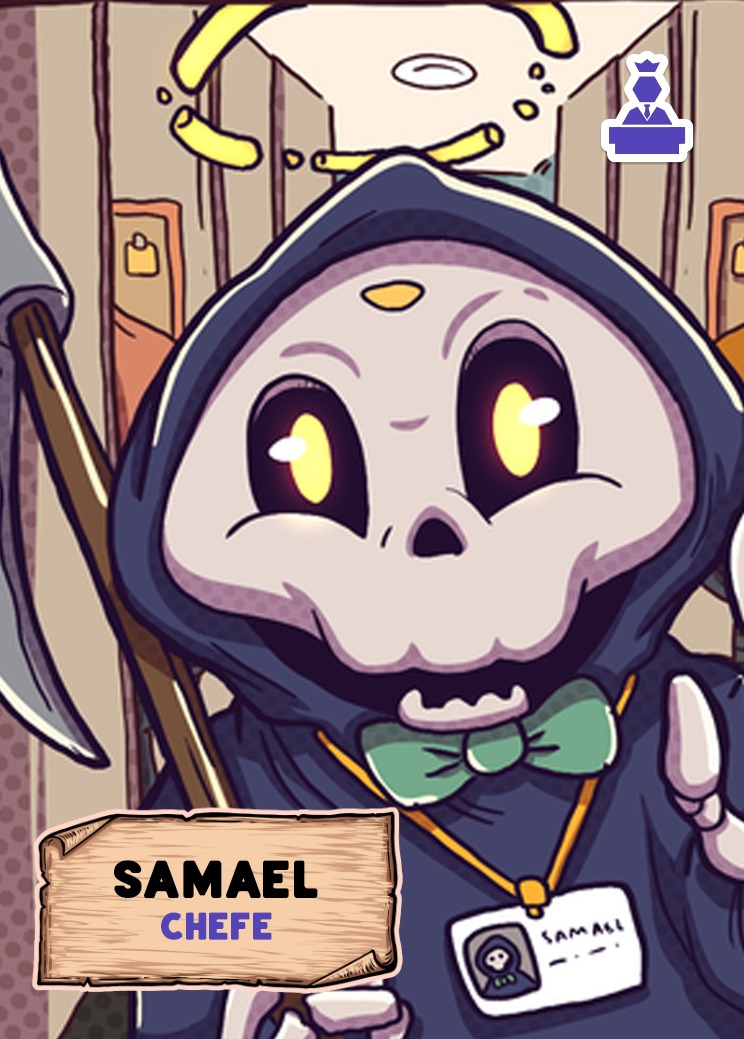
Funcionário do Mês is a systems-driven card game set in the universe of The Death Into Trouble and Tales of the Death from Hanoi Studios, where players take on the role of employees inside a bureaucratic afterlife. Heaven, Purgatory, and Hell operate as competing departments, and players must organize souls efficiently while dealing with constant disruptions caused by monsters, system failures, and corporate chaos. Designed as a hybrid experience, the game supports competitive, cooperative (in testing), and team-based modes, encouraging emergent gameplay, negotiation, and strategic disruption. Inspired by classic rummy-style card games such as Canasta and Brazilian variants like Buraco and Caxeta. The core design goal was to create a game that is easy to learn, difficult to master, and highly replayable. With matches lasting around 40 minutes and supporting up to 8 players, Funcionário do Mês emphasizes social interaction, adaptability, and long-term engagement through expansions, alternate modes, and physical collectibles. The ultimate objective remains simple: outperform the chaos and earn the title of Employee of the Month.
Game & Systems Design
Designed the full rule system, card interactions, victory conditions, and player flow across competitive, cooperative, and team-based modes. Balanced randomness, disruption, and player agency to maintain tension and replayability.
Mechanics & Emergent Gameplay
Created over 80 unique cards distributed across three core departments (Heaven, Purgatory, and Hell), each introducing asymmetric effects, adversities, and systemic chaos that alter player strategies dynamically.
Mode Design
Designed multiple game modes, including competitive free-for-all, team-based play, and an experimental cooperative mode, each with distinct victory conditions and player dynamics.
Progression & Expansion Design
Defined long-term progression through physical rewards (Employee of the Month medals), planned expansions, new departments and modular rule extensions.
Documentation & Prototyping
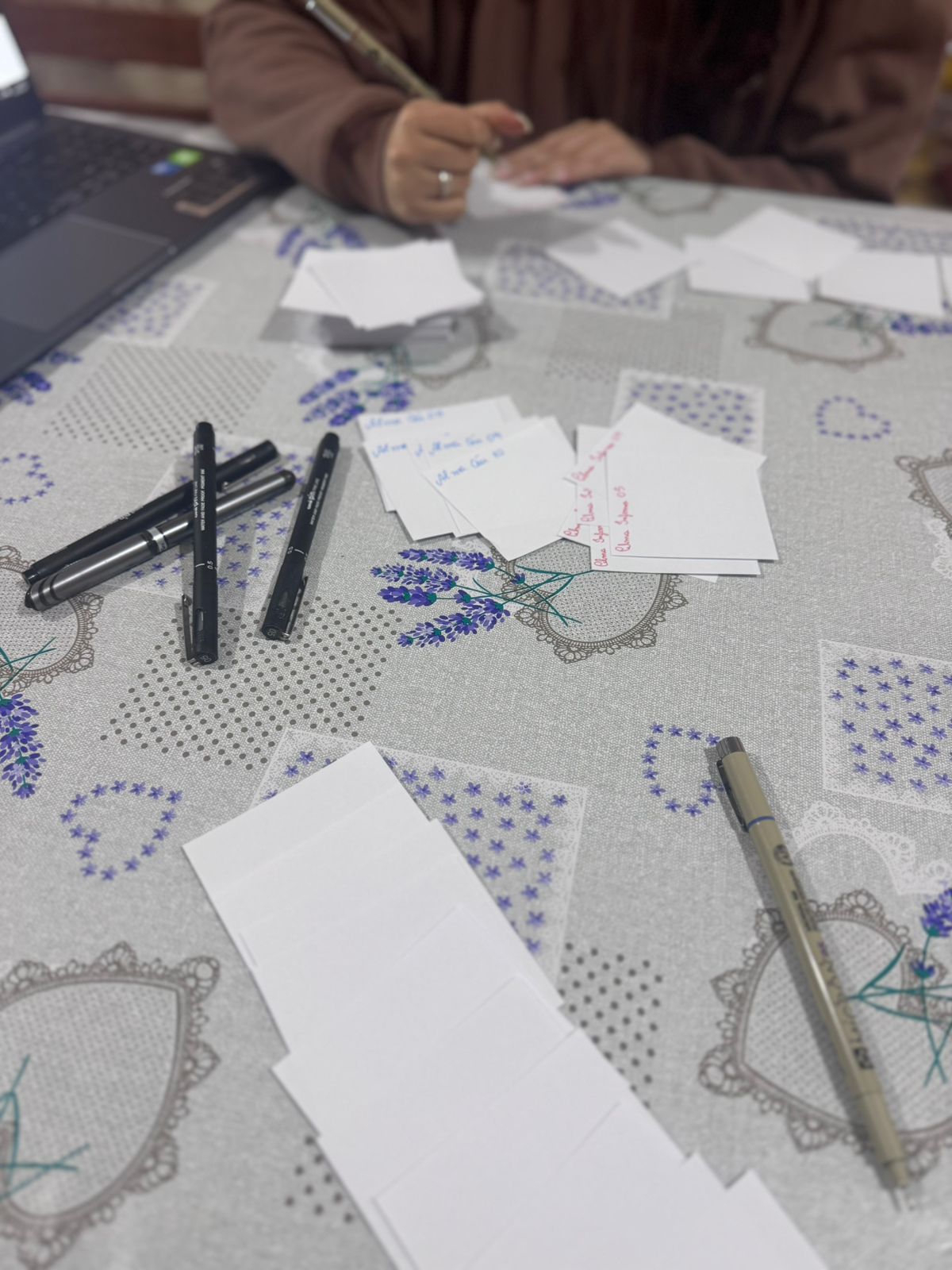
Authored a complete Game Design Document detailing rules, card logic, modes, and expansion paths. Prototyped and iterated on mechanics through physical playtesting and rapid rule adjustments.
Creative Direction & Worldbuilding
Integrated narrative themes, characters, and visual identity from the The Death Into Trouble universe, aligning mechanics, humor, and art direction into a cohesive tone.

Design & Prototyping
Figma, physical card prototyping
Documentation
Game Design Document (GDD), rulebooks, system diagrams
Production
3D printing for accessories and gameplay supports
Emergent systems, social dynamics, and long-term replayability
Serious Game for Professional Training and Critical Decision-Making
Serious Game
Decision-Making
Systems Design
Health Training
Player Responsibility
Completed
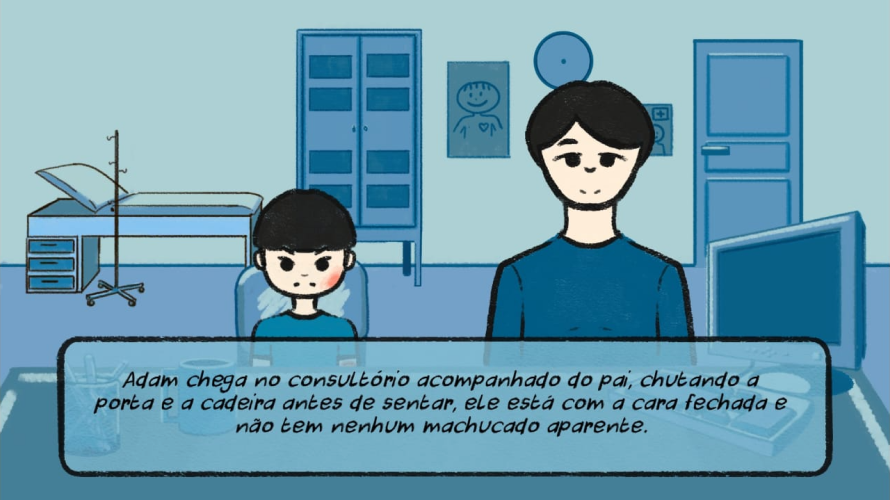
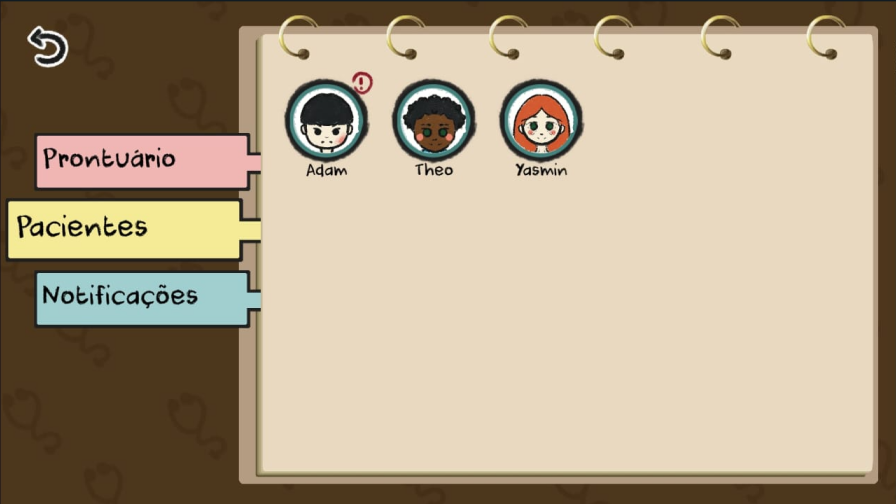
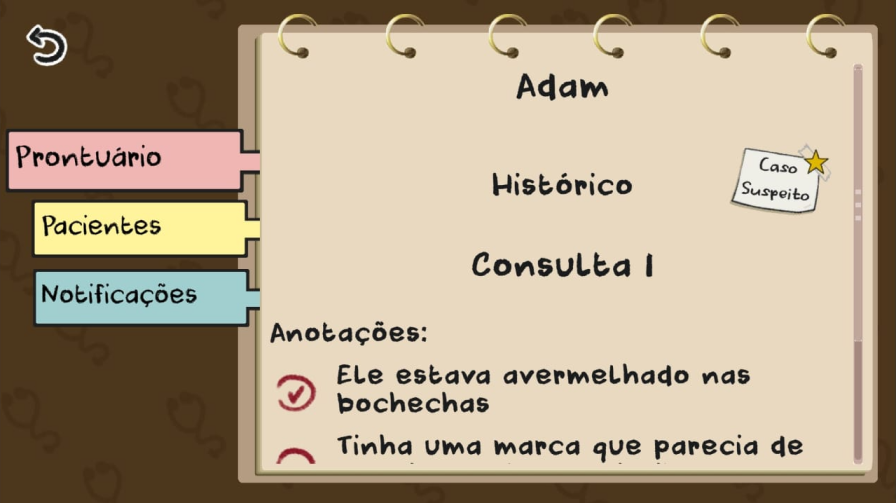
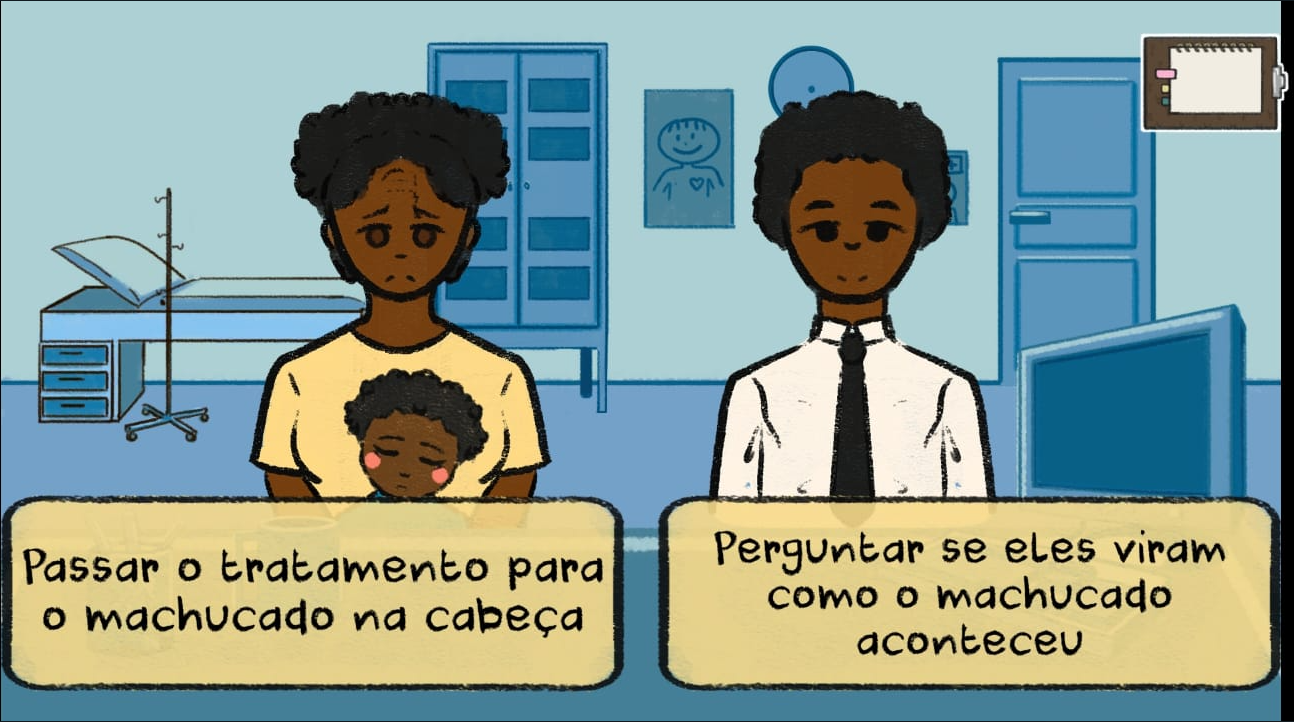
Take Care is a serious game designed to train healthcare professionals to identify early signs of child abuse through observation, decision-making, and contextual analysis. The experience places players in realistic scenarios where subtle visual cues, dialogue, and environmental details must be interpreted carefully. Instead of relying on explicit indicators, the game challenges players to recognize patterns, assess risk, and make informed decisions under uncertainty, reflecting real-world professional responsibility. A core design goal was to balance emotional sensitivity with clarity and accountability, ensuring the experience remained respectful while still encouraging critical thinking, awareness, and proactive intervention.
Game & Systems Design
Designed the core gameplay loop focused on observation, interpretation, and decision-making. Structured systems to reward attention to detail rather than speed or trial-and-error.
Scenario & Interaction Design
Developed interactive scenarios based on real-world situations, translating complex professional judgment into accessible gameplay mechanics.
Player Experience & Ethics
Carefully balanced challenge, feedback, and narrative framing to avoid sensationalism while maintaining emotional impact and learning effectiveness.
Testing & Iteration
Conducted playtests and refined pacing, clarity, and feedback systems based on user responses and learning outcomes.
Engine
Unity
Design & Documentation
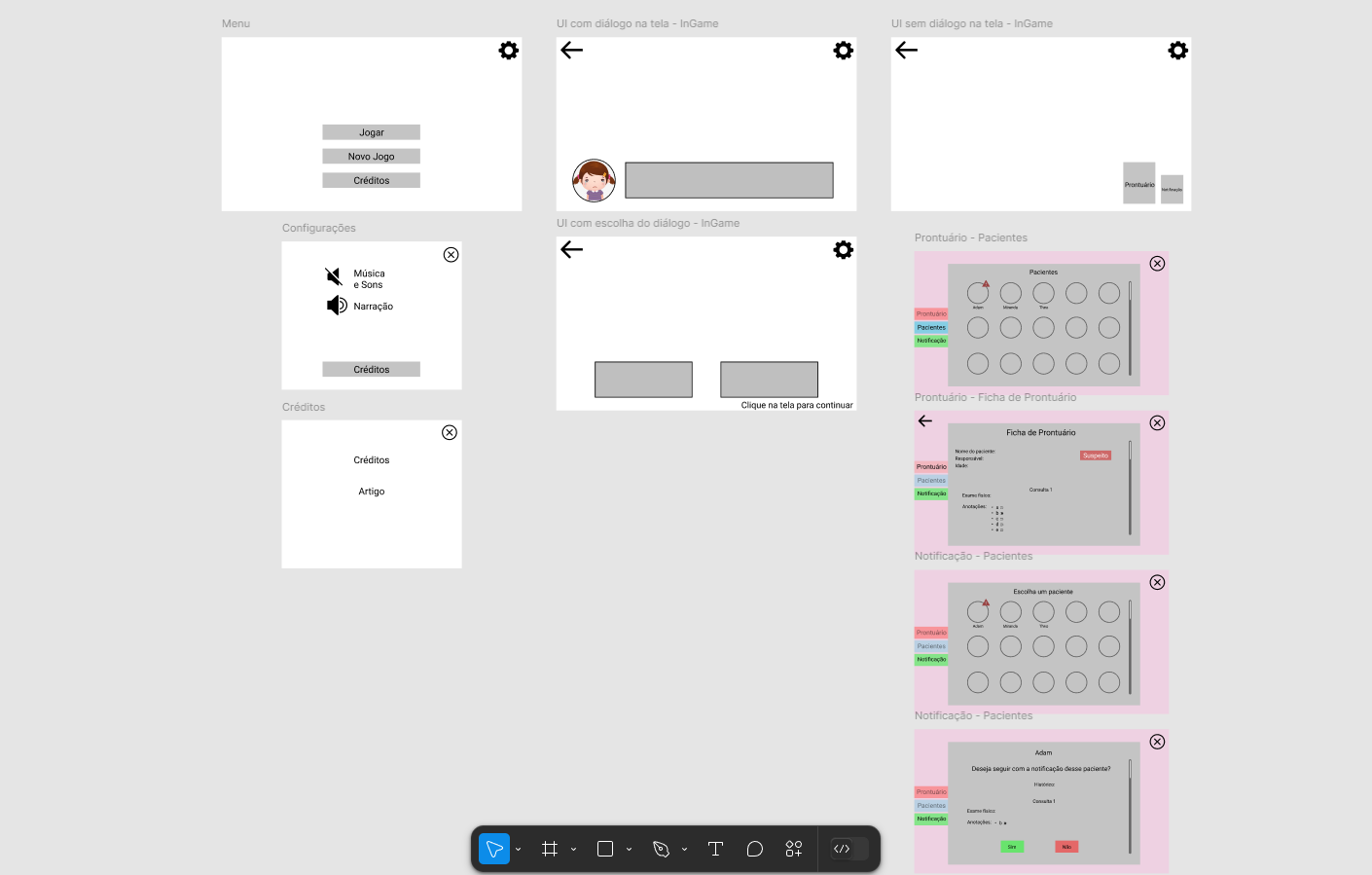
Game Design Document (GDD), flowcharts, scenario mapping
Decision-making systems, player responsibility, and ethical game design
Live Service Tycoon Game with Player-Driven Economy (Roblox)
Systems Design
Game Economy
Live Prototype
Tycoon
Roblox
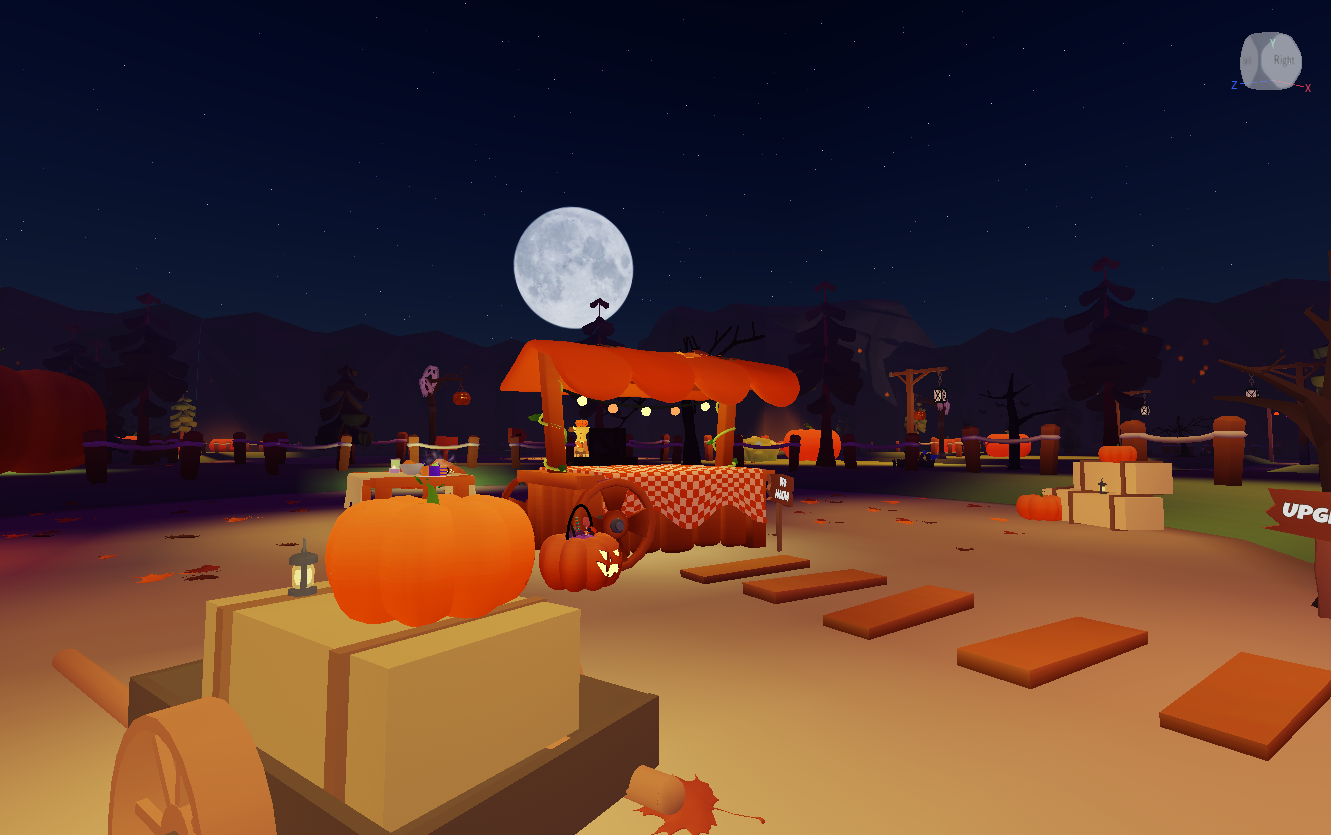
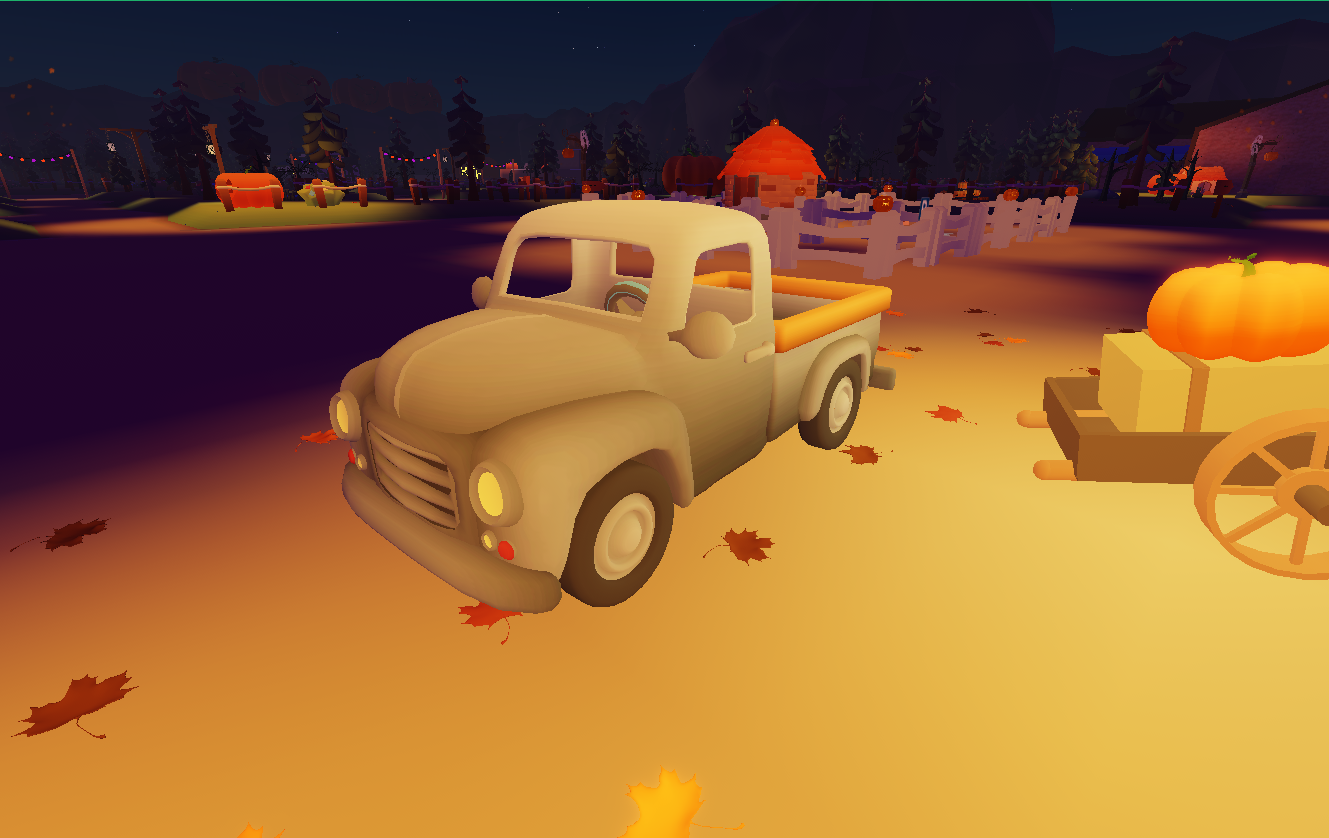
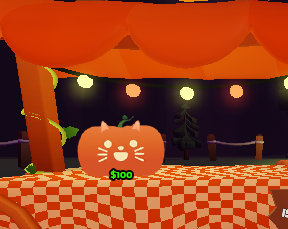
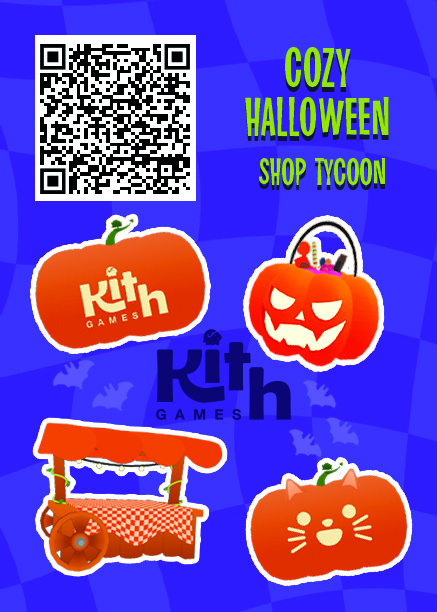
Cozy Halloween Shop Tycoon is a Halloween-themed tycoon game developed for Roblox, where each player owns a pumpkin farm and shop, managing the full production pipeline from planting to final sale. Designed as a live-service experience, the game focuses on player-driven economy, social interaction, and cozy progression. Players can sell items to NPCs or other players, decorate their shops with creations made by the community, and influence the in-game market through pricing, scarcity, and upgrades. The core design goal was to create a relaxing yet strategic experience that combines accessible tycoon mechanics with deeper economic systems, emergent player behavior, and long-term progression through rebirth and monetization loops.
Systems & Economy Design
Designed the complete production-to-sale pipeline, including resource generation, inventory management, pricing systems, NPC buying logic, and player-to-player commerce.
Progression & Scaling
Defined multi-layered progression systems across farms, shops, crafting stations, and rebirth mechanics, balancing short-term satisfaction with long-term retention.
Live Gameplay & Emergent Systems
Designed mechanics that encourage emergent player behavior, such as item theft, defense, social risk-reward, and market competition.
FTUE & Onboarding
Designed a fully guided first-time user experience, gradually introducing systems without blocking player agency.
Monetization Design
Designed ethical monetization options aligned with progression speed, convenience, and cosmetic value, avoiding pay-to-win dominance.
Documentation & Balancing
Authored detailed system documentation, formulas, and scaling models to support iteration, tuning, and future live updates.
Engine & Platform
Roblox Studio
Design & Prototyping
Figma, spreadsheets, system formulas
Documentation
Game Design Document (GDD)
Player-driven economy, live systems, and long-term progression